
Itchy skin - What to do?
You know the scene. Your dog is scratching — really scratching — and then they start doing those little nibbling bites along their fur, like they’re trying to reach something with their teeth that their paws can’t get to. It looks frantic. It looks uncomfortable. And it probably is.
That nibbling behavior is called “flea-bite grooming” — but fleas aren’t always the cause. It’s just what dogs do when surface itching becomes intense enough that scratching alone doesn’t satisfy it. They switch to their teeth.
At Marley Pet Sanctuary we see this regularly across dogs of different breeds and backgrounds. The honest truth about this kind of itching: Identifying the cause almost always requires trying multiple things, and doing them at the same time rather than one at a time.
Before Anything Else: Check for Fleas
This is the non-negotiable first step. Flea allergy dermatitis is one of the most common causes of intense itching in dogs — and you can’t manage it with diet changes or detergent switches. It requires actual flea treatment.
• Part the fur at the tail base and lower back — the most common location for flea activity
• Look for flea dirt: tiny black specks that turn reddish-brown when placed on a damp white paper towel
• Check the belly and inner thighs — thin-furred areas where fleas are easier to spot
• You may not see live fleas — a single flea bite is enough to trigger a reaction in a sensitive dog
If fleas are present, treat the dog and the environment (bedding, carpets) before doing anything else. Everything below assumes fleas have been ruled out.
Because the cause is rarely obvious, the most useful approach is to run through the most common culprits systematically. This table is your starting point.
|
Check This |
What It Tells You |
|
Fleas present? |
Treat immediately before any other step — see above |
|
Anything change recently? |
New food, new detergent, new cleaning product, new treat — recent changes are the highest-yield clue |
|
Seasonal pattern? |
Worse in spring/fall = likely environmental allergy (pollen, grass) |
|
Year-round with no pattern? |
More suggestive of food allergy or a constant contact irritant like bedding detergent |
|
Location of itching? |
Tail base = flea. Paws/face/groin = environmental. Belly/armpits = contact. Diffuse = food or systemic |
|
Anyone in the household also itching? |
Strong signal of a shared contact trigger — start with detergent and cleaning products |
What you can tray right now
These are the four most impactful starting interventions at the Marley Pet Sanctuary. They’re not mutually exclusive — we often start two or three at the same time.
1. Change Your lundry Detergent
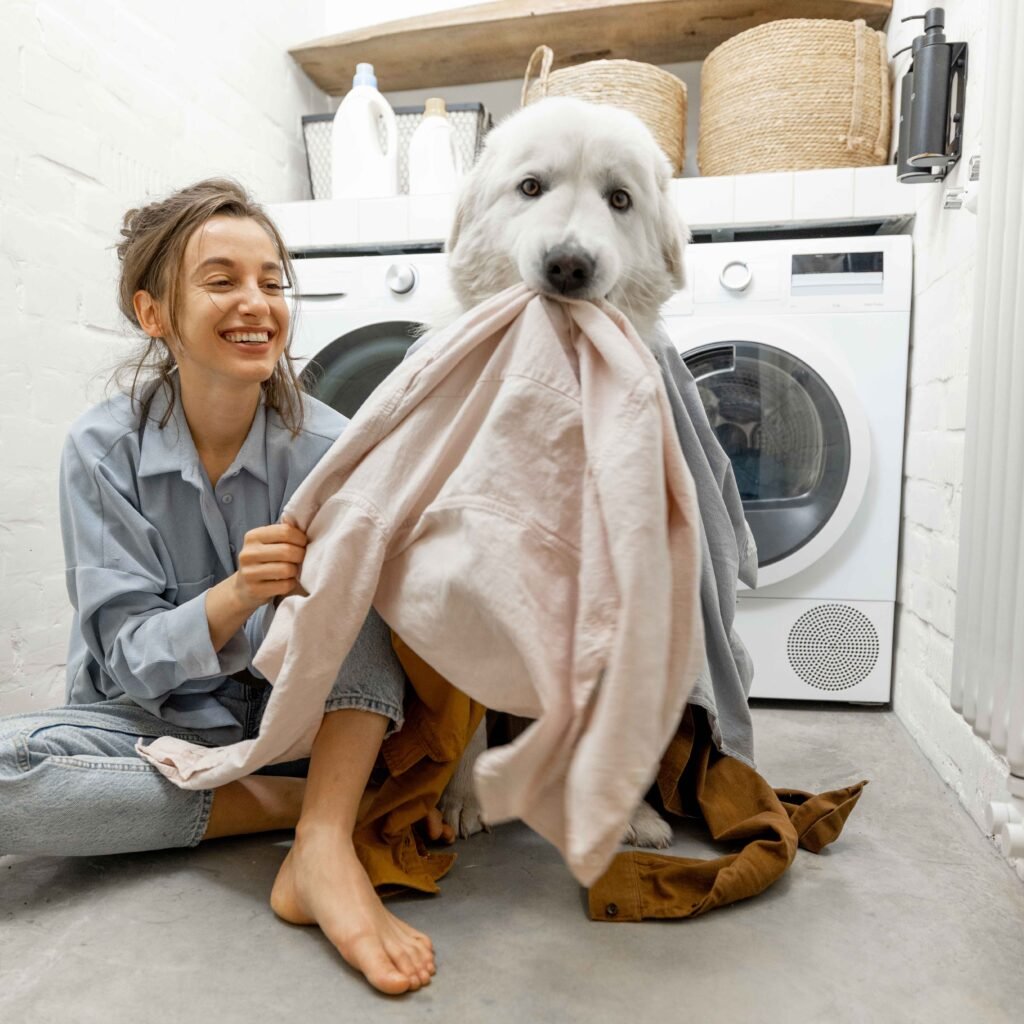
This is the change most people don’t think of — and the one that resolved Shelby’s case. She is a boxer mix at the Marley Pet Sanctuary mix that started itching a lot.
Dogs spend more hours in contact with their bedding than almost any other surface. If that bedding is washed in a fragranced or dye-containing detergent, the dog is being continuously exposed to a skin irritant.
- Switch to a fragrance-free, dye-free detergent — ideally mild and organic
- Wash all dog bedding, blankets, and any furniture covers the dog contacts in the new detergent
- If your dog sleeps in your bed, wash your bedding too
Give it 2 weeks — skin reactions to contact irritants take time to clear
At the Marley Pet Sanctuary we switched from conventional lundry detergent to Rebell Green Organic lundry detergent.
This is the change most people don’t think of — and the one that resolved Shelby’s case. She is a boxer mix at the Marley Pet Sanctuary mix that started itching a lot.
Dogs spend more hours in contact with their bedding than almost any other surface. If that bedding is washed in a fragranced or dye-containing detergent, the dog is being continuously exposed to a skin irritant.
- Switch to a fragrance-free, dye-free detergent — ideally mild and organic
- Wash all dog bedding, blankets, and any furniture covers the dog contacts in the new detergent
- If your dog sleeps in your bed, wash your bedding too
Give it 2 weeks — skin reactions to contact irritants take time to clear
AskJovi.com earns a small commission on purchases made through our Amazon links, at no extra cost to you. Our recommendations are based on real evaluations at Marley Pet Sanctuary, where we stretch every dollar to find the best quality products for the animals in our care.
2. Rethink What You're Mopping With

Most conventional floor cleaners contain surfactants, synthetic fragrances, and chemical disinfectants — ingredients that leave a residue on your floors long after they dry.
For pets who spend most of their time at ground level, that residue ends up on their paws, their bellies, and eventually in their mouths.
A simpler, pet-safer alternative costs almost nothing:
Fill a bucket with warm water, add a few tablespoons of baking soda, and a splash of white vinegar. The combination gently cleans and deodorizes without leaving behind anything that could irritate your pet’s skin or digestive system.
At the Marley Pet Sanctuary, it’s the only thing we use on our floors.
Most conventional floor cleaners contain surfactants, synthetic fragrances, and chemical disinfectants — ingredients that leave a residue on your floors long after they dry.
For pets who spend most of their time at ground level, that residue ends up on their paws, their bellies, and eventually in their mouths.
A simpler, pet-safer alternative costs almost nothing:
Fill a bucket with warm water, add a few tablespoons of baking soda, and a splash of white vinegar. The combination gently cleans and deodorizes without leaving behind anything that could irritate your pet’s skin or digestive system.
At the Marley Pet Sanctuary, it’s the only thing we use on our floors.
3. Add Omega-3 Supplementation
Omega-3 fatty acids reduce the inflammatory response that drives itching from the inside out. They work for environmental allergies, food allergies, and general skin inflammation — making them useful even before you’ve identified the root cause.
• Look for a supplement with meaningful DHA and EPA content — check the label, not just the brand name
• Takes 4–8 weeks to see full effect — start now and be consistent
4. Try an OTC Antihistamine
Over-the-counter allergy medication — the same kind humans use for seasonal allergies — can provide short-term itch relief while you work on identifying the root cause.
• Cetirizine (Zyrtec) and loratadine (Claritin) are often recommended by vets. They are safe for dogs — However. Plain formulas only, never versions with decongestants like pseudoephedrine, which are toxic to dogs
• Antihistamines work better for environmental and contact allergies than food allergies
• Think of them as symptom management while you address the underlying cause — not a long-term fix on their own
The difference betwen Zyrtec and Claritin in dogs
Both are second-generation antihistamines that block H1 receptors, but they behave a bit differently in dogs:
Cetirizine (Zyrtec)
- Slightly more sedating — which can actually be useful for a dog that won’t stop scratching
- Tends to have a stronger antihistamine effect, making it the more commonly recommended option for dogs with skin-related allergy symptoms
- Once daily dosing
Loratadine (Claritin)
- Marketed as “non-drowsy” — less sedating than cetirizine
- Generally considered milder in effect, which also means it may be less effective for intense itching
- Once daily dosing
- Important watch-out: some Claritin formulas contain propylene glycol, which is harmful to dogs — label checking is even more critical here than with Zyrtec
Bottom line for dogs with skin allergies and itching: Zyrtec is generally the preferred choice. The slightly stronger histamine-blocking effect is an advantage when the primary symptom is itch, and the mild sedation can give a suffering dog some relief. Loratadine is a reasonable alternative if cetirizine isn’t available.
Watch-out for additional ingredients
Many antihistamine products marketed for humans contain additional active ingredients — decongestants, pain relievers, or sleep aids — that can be harmful or toxic to dogs. Be careful with antihistamines sold in dollar stores. The products recommended below are safe for dogs.
Zyrtec
The best option is the Zyrtec 24 Hour Allergy Relief Tablets, 10mg cetirizine HCl . The product link below is the plain formula which is safe for dogs.
Claritin
The best option is the 100-count plain loratadine tablet — loratadine 10mg only. The product link below is the plain formula which is safe for dogs.
AskJovi.com earns a small commission on purchases made through our Amazon links, at no extra cost to you. Our recommendations are based on real evaluations at Marley Pet Sanctuary, where we stretch every dollar to find the best quality products for the animals in our care.
How about Food ?
Food allergies get blamed for a lot of itching in dogs — but true food allergies, where the immune system genuinely attacks a food protein, are actually uncommon. Research suggests they affect only 1 to 2 percent of dogs overall.
What’s far more common is a gut and immune system worn down by years of heavily processed, low-quality commercial food. The additives, fillers, and low-grade protein meals found in most kibble create chronic low-level inflammation — and that inflammation shows up on the skin. It looks like an allergy. It gets treated like an allergy. But the root cause is gut health, not the protein itself.
A 2022 study at the Carlson College of Veterinary Medicine found that dogs fed a fresh diet showed meaningful improvement in skin health, and a University of Helsinki survey of 632 dogs found that over 90% with skin or digestive issues improved after switching to fresh food.
Before assuming your dog has a food allergy, look at what they’re eating first. A dog thriving on fresh, minimally processed food rarely develops the chronic sensitivities that plague dogs raised on heavily processed diets.