
We have seen firsthand what consistent omega-3 supplementation can do — healthier coats, calmer skin, more mobile joints, and dogs that simply look and feel better. It is one of the most evidence-backed, cost-effective supplements in canine nutrition.
Start with the right product, verify the DHA and EPA content on the label, and adjust the dose to your dog’s weight and health needs. When in doubt, speak with your veterinarian — especially when starting a therapeutic protocol for a dog with existing health conditions.
At the Marley Pet Sanctuary, every dog and cat in our care receives daily algae oil. It’s one of the first things we reach for — and one of the last things we’d ever remove from their routine.
Omega-3 fatty acids are essential fats — meaning the body cannot produce them on its own, they must come from food or supplements. The two most important forms for dogs are DHA (docosahexaenoic acid) and EPA (eicosapentaenoic acid). Once absorbed, DHA and EPA work throughout the body in several key ways:
There are two primary sources of DHA and EPA: Marine algae and fish. Understanding the difference matters — both for your dog’s health and for the planet.
All omega-3 in the ocean originates in marine microalgae. It is algae that produces DHA and EPA — fish don’t create these fatty acids, they simply accumulate them by eating algae throughout their lives.
Fish oil has long been the go-to omega-3 supplement. It works — but it is one step removed from the original source. To obtain fish oil, fish must be caught, processed, and rendered. This puts pressure on marine ecosystems and introduces questions of sustainability, heavy metal contamination, and supply chain stability.
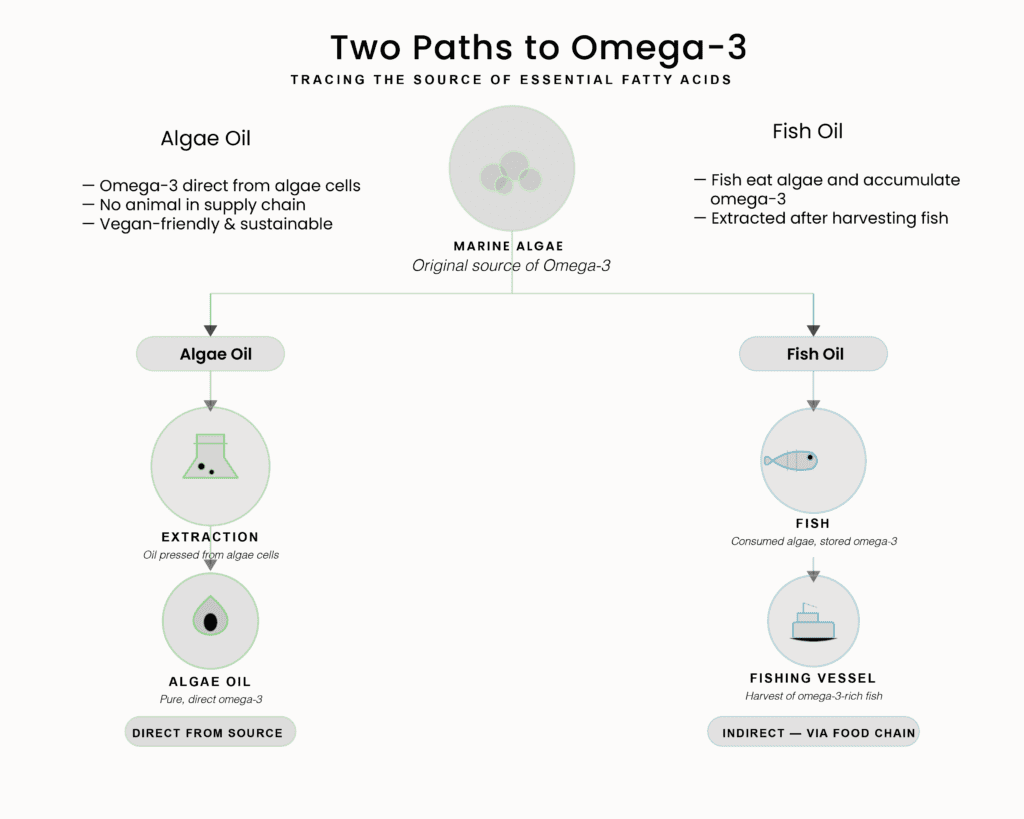
We recommend algae oil over fish oil. If fish get their omega-3 from algae, why not go straight to the source? Algae oil delivers the same DHA and EPA with distinct advantages:
Not all omega-3 products are created equal. The label may say “omega-3,” but what counts is the actual amount of DHA and EPA per serving — not the total oil volume.
Many products on the market — especially those found on large online retailers — only list how much oil to give your dog, without disclosing the DHA and EPA content. They contain often too much oil. This makes it impossible to know whether your dog is receiving a therapeutic dose. Some of these products are slightly less expensive, but because they are far less concentrated, you would need to give four times the amount to achieve the same effect as a high-potency algae oil. You end up adding unnecessary fats to your dog’s diet and often paying more in the long run.
For dogs that need to lose weight, a high-potency omega-3 oil is the better choice. A concentrated product means your dog gets the full therapeutic benefit of DHA and EPA with a much smaller volume of oil — and fewer unnecessary calories from fat.
Veterinarian-formulated • Made in the USA • NASC Quality Seal
Per 1 tsp (5ml) serving: 635 mg DHA • 195 mg EPA • Vitamin E included • Organic flaxseed
Why we chose it over mainstream alternatives:
AskJovi.com earns a small commission on purchases made through our Amazon links, at no extra cost to you. Our recommendations are based on real evaluations at Marley Pet Sanctuary, where we stretch every dollar to find the best quality products for the animals in our care.
At the Marley Pet Sanctuary, we add organic algae oil to the food of every dog and cat in our care as a daily preventive measure. Here is how we approach dosing:
Nutrient | Daily Target |
DHA | 635 mg |
EPA | 195 mg |
Serving size | ~1 tablespoon |
Dogs with serious inflammatory skin issues require a higher therapeutic dose. Our dog Jovi, who came to us with severe skin problems and stiff joints. Jovi has 49 lbs and receives:
Nutrient | Daily Target |
DHA | 1500 mg |
EPA | 350 mg |
Serving size | 2.5 tablespoon |
In addition we add 120 ul Vitamin E drops to Jovi’s OMEGA-3 therapy
Omega-3 fatty acids increase the body’s need for antioxidant support. Vitamin E is essential when supplementing at higher doses — it protects the fatty acids from oxidizing in the body and amplifies their healing effect on the skin. For most healthy dogs, a quality multivitamin that includes vitamin E is sufficient. For dogs with severe skin conditions like Jovi, we administer vitamin E as a dedicated daily supplement alongside the algae oil.
D-Alpha Tocopherol · Made in the USA · Non-GMO
| Per serving (a few drops) | |
|---|---|
| Form | D-Alpha Tocopherol (natural) |
| Concentration | High potency liquid |
| Extras | Pure oil · No fillers |
Why we chose it:
A sanctuary staple — small bottle, big impact.
Price $11.23 / 1oz
AskJovi.com earns a small commission on purchases made through our Amazon links, at no extra cost to you. Our recommendations are based on real evaluations at Marley Pet Sanctuary, where we stretch every dollar to find the best quality products for the animals in our care.